
Since the deadline for Justice B N Srikrishna Committee's feedback is December 31, the government is unlikely to table a data protection Bill in the winter session of Parliament.

User protection and a proposal for a licensing framework for companies seeking to operate in the cryptocurrency area will be part of an upcoming consultation paper on the sector, said a senior industry executive. Even as specific regulations around crypto are yet to take shape, companies are setting up baseline user protection processes, including a redressal mechanism, fraud detection, regular filing of suspicious transaction reports (STRs), among others.

'The focus of the legislation will be to minimise user harm and increase the accountability of platforms, while also promoting innovation.'

The Delhi High Court has set aside a Central Information Commission (CIC) order that directed the disclosure of information related to Prime Minister Narendra Modi's bachelor's degree.

Despite the alarming figures on job displacement, AI is expected to generate millions of new roles, echoing historical trends of technological transformation.

Congress leader Rahul Gandhi alleges that the Election Commission is colluding with the BJP to manipulate elections, citing data analysis from a Karnataka constituency. He claims evidence of 'vote chori' and demands transparency from the EC.

Digipin promises to revolutionise location-based services in India with safeguards.

'Marathwada is the suicide capital of Maharashtra.' 'To stop such man-made disasters, the government should immediately come up with a rightful package, not this charitable approach to compensation.'

Reels often induce the FOMO-'Act now!' mentality. But sound investing is about consistency, diversification and a long-term horizon.

'People are taking effort to train and adapt to current skills.' 'If that is not there, they are not useful to us.' 'They have to adapt to new technology, and what is important is learnability.'

Unauthorised sale of data to third parties will land developers in trouble.

If the Personal Data Protection Bill gets passed in its present form, a new class of companies and entities could emerge. The sole job of these new entities would be to manage the consent for data usage of a user.Banks, healthcare firms and fintech companies, among others, fear that sharing non-personal data with the government may hurt business interests. Banks also fear the threat of data misuse.

Here's what you must know about the new rule, its implications, and whether it affects taxpayers' rights and privacy.

Anmol Singh Jaggi and Puneet Singh Jaggi, once hailed as rising stars in India's clean energy sector, are now facing serious regulatory action.

'Unless the government comes up with the rulebook, the technical requirements will not be clear to us.' 'Going by the Act, non-technical provisions can be complied with within six months.' 'But we need up to 24 months for provisions like parental consent.'

AI-driven and deepfake-enabled cyberattacks are anticipated to become increasingly prevalent in 2025 with sectors like healthcare and finance most prone targets, according to a recent report. The India Cyber Threat Report 2025 by the Data Security Council of India (DSCI) and Seqrite, spotlighted the evolving tactics of cybercriminals and the rise of AI-driven attacks as a major concern. "Artificial Intelligence (AI) will be used to develop highly sophisticated phishing campaigns utilising deepfake technology and personalised attack vectors, making them harder to detect.

The Jane Street-Sebi saga is more than a legal dispute -- it's a litmus test for India's ambitions as a global financial hub.

'If you align your ambition with India's rise, the peak of your careers will unfold alongside the peak of India's power.'

Simplifying investment policies at the micro level and introducing a time-bound framework will be critical for India's growth targets, notes Krishna Ella.

After the draft data protection bill, the government is now all set to bring another key legislation -- Digital India Bill -- that will be made available for public consultation by the month-end, Minister of State for IT Rajeev Chandrasekhar said on Thursday. The Digital India Bill, which will replace the 22-year old Information Technology (IT) Act, will be contemporary and a modern piece of legislation, the Minister promised. The proposed bill, alongside the Digital Personal Data Protection (DPDP) Bill whose draft was released recently, will contribute to the evolving framework which is light on regulation, safeguards consumer rights and catalyses innovation, the minister said while speaking at CII Global Economic Policy Summit 2022.

Google's chief privacy officer, Keith Enright, has warned policymakers that frequent and large-scale sharing of citizen data, even if anonymized, can damage users' privacy. Pointing to research that shows data sets lose their anonymity if shared consistently over time, he said: "I would encourage policymakers and companies to be extremely circumspect while proceeding in that direction." Anonymization is a technique that removes or modifies personally identifiable information, resulting in data that cannot be associated with any one individual.

In the worst-case scenario, it will be next to impossible for tech companies like Amazon and Google to run any service that requires user biometrics.

Clearly, some of the bullishness of the early days has gone missing. Ola's market share is slipping amid rising competition from incumbents like Bajaj Auto and TVS.

I'...additional concessions, such as opening government procurement, reducing agricultural subsidies, weakening patent protections, and allowing unrestricted data flows -- demands India has resisted for decades.'

Markets regulator Sebi has notified a stricter regulatory framework for small and medium enterprise (SME) IPOs by introducing a profitability requirement and capping a 20 per cent limit on offer-for-sale (OFS). The reforms aim to provide SMEs with a sound track record an opportunity to raise funds from the public while protecting investor interests. This move follows a rise in SME issues, which has driven significant investor participation.

States are mandated to develop and implement 'heat HAPs' for prevention of heat-induced diseases. But most do not go beyond standard advisory on heat prevention.
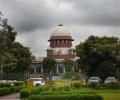
The Supreme Court of India has formed a National Task Force (NTF) to address the growing concern of student suicides in higher educational institutions. The court took note of the recurring cases and directed Delhi Police to register FIRs on the complaints of families of two students who died by suicide at IIT Delhi in 2023. The NTF, chaired by former apex court judge Justice S Ravindra Bhat, will prepare a comprehensive report, including the identification of causes leading to suicides, analysis of existing regulations, and recommendations for strengthening protections. The NTF will also have the authority to conduct surprise inspections of higher educational institutions and make further recommendations to ensure a holistic approach to addressing mental health concerns and eliminating suicides.
The government on Monday published a draft data policy for public consultation, which says all data collected, generated, and stored by every government ministry and department will be open and shareable barring certain exceptions. Also, detailed datasets that have undergone value addition could be monetised by the government. The policy document, called "Draft India Data Accessibility & Use Policy 2022", prescribes that a regulatory authority called the Indian Data Council (IDC) and an agency by the name India Data Office (IDO) will oversee framing metadata standards and enforcement, respectively.

Many enter this arena without a detailed understanding of how their algo works.' 'Diligently review information on the strategy, risk profile, potential losses, and expected gains before investing.'

Even as net flows into smallcap funds in March turned negative, for the first time in 30 months, they remained a big draw for new investors. The smallcap fund category saw a net of 360,000 investment accounts, or folios, getting added last month, the second-most among all active equity categories. Smallcap funds' continued traction could be driven by their strong performance across timeframes, say experts.

Billionaire Mukesh Ambani on Friday backed the proposed data privacy and cryptocurrency bills, saying India is putting in place the most forward-looking policies and regulations. Ambani, who has been a votary of Indians owning and controlling their own data and the nation drafting strict rules around how digital information is stored and shared, said nations have the right to build and protect strategic digital infrastructure. Stating that data is the 'new oil', he said every citizen's right to privacy has to be safeguarded. "India is putting in place the most forward-looking policies and regulations," he said at the Infinity Forum, hosted by International Financial Services Centres Authority (IFSCA).

Recently, an Air India flyer sent a legal notice to the airline seeking damages of Rs 30 lakh for the breach of personal data of 4.5 million passengers, including her husband and herself. Air India had informed the complainant of the data leak a month earlier, after it emerged that its passenger service system provider fell prey to a cyberattack in February. However, in the absence of a data protection law, India lacks a mechanism for compensation or grievance redress of consumers in such cases, say experts. Advocate Virag Gupta, a New Delhi-based cyber law expert, explains that a legal notice is a good beginning in the Air India case, but it raises many questions. These include whether sensitive personal information has been leaked and whether the airline is responsible or not, given that a passenger service system provider was also involved.

IAMAI in a statement, which represents digital businesses in India, said Trai's recommendation to formulate standards of anonymisation and de-identification was akin to putting the cart before the horse, and till such time the Srikrishna Committee submits the report, making these standards would be like groping in the dark.

Jobs requiring AI skills carry a significant wage premium, with some roles offering up to a 25 per cent increase in wages, notes Manoj Nagpal, vice president, professional services, OpenText, an information management company.

Parliamentary Affairs Minister Prahlad Joshi has said that 31 bills will be taken up in the monsoon session. Among these include the Digital Personal Data Protection Bill, 2023.

Many who track the ministry and the technology sector closely believe that the space won't see much impact on the policymaking side, but the gestation time for regulations might get long, as now there could be a wider consensus-building exercise on policy matters under a coalition government.

The Sebi board on Wednesday approved a series of measures, including stricter regulatory norms for SME IPOs, a comprehensive overhaul of investment banking regulations, and an expanded definition of Unpublished Price Sensitive Information (UPSI). Also, the board approved reforms to boost ease of doing business for Debenture Trustees, ESG rating providers, InvITs, REITs, and SM REITs.

India is unlikely to join the ongoing negotiations for a plurilateral deal on e-commerce at the World Trade Organization (WTO), notwithstanding a change in stance on data localisation and cross-border flow of data. Under the new draft digital personal data protection (DPDP) Bill, put out on Friday for public consultation, the government has proposed free cross-border flow of data with 'friendly' nations, significantly easing its earlier stance on data localisation. India has so far stayed out of a group of 87 countries, including the US, European Union, China, and Japan that are negotiating trade-related aspects on e-commerce since December 2017.
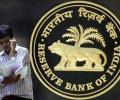
The Reserve Bank of India (RBI) has recognised the Fintech Association for Consumer Empowerment (FACE) as a self-regulatory organisation (SRO) in the fintech sector, the central bank announced on Wednesday. The banking regulator received three applications for fintech SRO. Of the remaining two applications, one has been returned by the RBI with a provision for resubmission after meeting specific requirements, while the third application is still under examination, said Governor Shaktikanta Das at the Global Fintech Fest in Mumbai.

Gandhi said just like the Constitution, the "caste census" is a policy framework and a guide for the Congress.
 © 2026 Rediff.com - Advertise with us - Disclaimer - Privacy Policy - Sitemap - Feedback - About us - Terms of use - Grievances